
Garlic Herb Pork Tenderloin with Dijon Pan Sauce
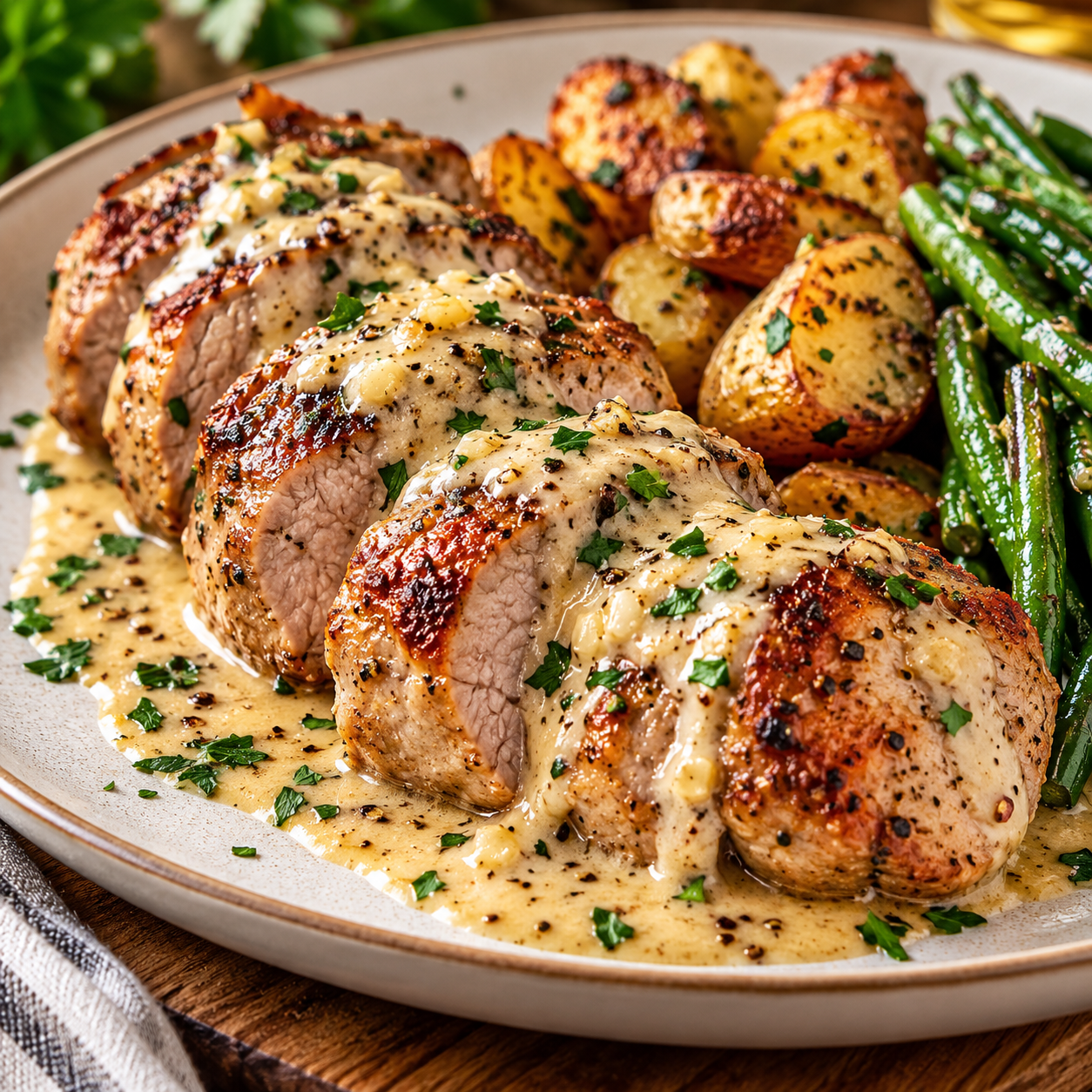
If you’re looking for a delicious dinner that feels special without requiring hours in the kitchen, this Garlic Herb Pork Tenderloin with Dijon Pan Sauce is the perfect choice. Juicy pork tenderloin is seasoned with garlic and herbs, seared until golden, and roasted until tender. A buttery Dijon pan sauce adds a savory, slightly tangy finish that brings everything together.
Best of all, this recipe uses simple ingredients and comes together in about 40 minutes. The pork develops a beautiful golden crust, while the pan sauce picks up flavor from the browned bits left in the skillet.
Whether you’re preparing a weeknight dinner or something special for guests, this garlic herb pork tenderloin delivers impressive flavor with surprisingly little effort.
Why This Recipe Works
- Tender, juicy pork: Pork tenderloin cooks quickly and stays tender when prepared to the proper temperature.
- Garlic and herb flavor: Rosemary, thyme, and garlic create a savory crust without overpowering the pork.
- Delicious Dijon pan sauce: Dijon mustard, chicken broth, and butter create a rich sauce with just the right amount of tanginess.
- One-skillet convenience: The pork and sauce are prepared in the same oven-safe skillet, making cleanup easier.
- Perfect for busy evenings: This impressive dinner comes together in approximately 40 minutes.
- Versatile and family-friendly: Serve it with mashed potatoes, rice, or your favorite vegetables for a complete meal.
- Additionally, the pan sauce uses the flavorful browned bits from searing the pork. As a result, you get a delicious homemade sauce without complicated ingredients.
Ingredients
For the Garlic Herb Pork Tenderloin
- 1½ pounds pork tenderloin (approximately 1–2 tenderloins, depending on size)
- 1½ tablespoons olive oil
- 3 cloves garlic, minced
- 1 teaspoon dried rosemary
- 1 teaspoon dried thyme
- 1 teaspoon garlic powder
- ¾ teaspoon kosher salt, or to taste
- ½ teaspoon black pepper
- ½ teaspoon smoked paprika
For the Dijon Pan Sauce
- ½ cup low-sodium chicken broth
- 2 tablespoons Dijon mustard
- 1 tablespoon unsalted butter
- 1 teaspoon honey
- 1 teaspoon fresh lemon juice
- 1 teaspoon fresh thyme leaves, optional
- Salt and black pepper, to taste
Instructions
- Preheat the oven. Preheat your oven to 400°F (200°C). Pat the pork tenderloin dry with paper towels and remove any silver skin with a sharp knife.
- Season the pork. In a small bowl, combine the minced garlic, rosemary, thyme, garlic powder, salt, black pepper, and smoked paprika. Rub the seasoning mixture evenly over the pork tenderloin.
- Sear until golden. Heat the olive oil in a large oven-safe skillet over medium-high heat. Once hot, add the pork and sear for approximately 2 minutes per side, turning until most surfaces are lightly browned. This should take about 5–6 minutes total. Reduce the heat slightly if the garlic begins to darken.
- Roast the pork. Transfer the skillet to the preheated oven. Roast for approximately 12–18 minutes, depending on thickness, checking the internal temperature with a meat thermometer. Remove the pork when the thickest section reaches 145°F (63°C).
- Let the pork rest. Transfer the pork tenderloin to a cutting board and loosely cover it with foil. Allow it to rest for at least 5 minutes before slicing.
- Prepare the Dijon pan sauce. While the pork rests, carefully place the hot skillet over medium heat. Pour in the chicken broth and scrape the browned bits from the bottom with a wooden spoon. Whisk in the Dijon mustard, honey, and lemon juice. Simmer for 2–3 minutes until slightly reduced.
- Finish the sauce. Reduce the heat to low and stir in the butter until melted and smooth. Add the fresh thyme, if using, and season with salt and black pepper to taste.
- Slice and serve. Slice the pork tenderloin into medallions and arrange them on a serving platter. Finally, spoon the warm Dijon pan sauce over the pork and serve immediately.
Tips for the Best Garlic Herb Pork Tenderloin
- Choose pork tenderloin, not pork loin. Although their names are similar, these cuts cook differently. Pork tenderloin is a smaller, leaner cut that works perfectly for this quick recipe.
- Don’t skip the searing step. Browning the pork creates a flavorful crust and develops the delicious pan drippings needed for the sauce.
- Use a meat thermometer. For the juiciest results, cook pork tenderloin to an internal temperature of 145°F. Overcooking can quickly make this lean cut dry.
- Let the pork rest before slicing. Resting helps retain the juices inside the meat. As a result, every slice stays moist and flavorful.
- Adjust the Dijon sauce to taste. If you prefer a milder mustard flavor, reduce the Dijon slightly. Alternatively, add a little more honey to balance the tanginess.
- Slice against the grain. Cutting across the muscle fibers creates tender, easy-to-eat pork medallions.
Easy Recipe Variations
Creamy Dijon Pork Tenderloin
For a richer sauce, stir in 2–3 tablespoons of heavy cream after the broth has reduced. Then, simmer gently until smooth and slightly thickened.
Honey Mustard Pork Tenderloin
Increase the honey to 1 tablespoon for a sweeter, more mellow mustard sauce. This variation is especially delicious with roasted potatoes.
Garlic Butter Pork Tenderloin
For a more buttery flavor, add an extra tablespoon of unsalted butter to the finished sauce. Additionally, sprinkle fresh parsley over the sliced pork before serving.
Lemon Herb Pork Tenderloin
Add a little extra lemon juice and fresh thyme for a brighter flavor. This variation pairs beautifully with rice or roasted vegetables.
What to Serve with Garlic Herb Pork Tenderloin
This garlic herb pork tenderloin pairs well with simple side dishes that complement the Dijon pan sauce without overpowering it.
- Creamy Garlic Mashed Potatoes — Fluffy mashed potatoes are an excellent choice because they soak up the savory Dijon sauce. They’re especially delicious alongside tender pork medallions.
- Buttery White Rice — White rice provides a simple base for the rich sauce. Plus, it’s an easy option for busy weeknights.
- Roasted Baby Potatoes — Golden roasted potatoes offer a satisfying contrast to the tender pork. Season them lightly with garlic and herbs to complement the main dish.
- Garlic Green Beans — Tender-crisp green beans add freshness and color to the plate. They’re also quick to prepare while the pork rests.
- Warm Dinner Rolls — Soft dinner rolls are perfect for soaking up the extra Dijon pan sauce. As a bonus, they make the meal feel a little more special.
How to Store and Reheat
Refrigerator: Allow leftover pork to cool slightly before transferring it to an airtight container. Refrigerate within 2 hours and use within 3–4 days.
Freezer: Place cooled pork in a freezer-safe container or bag and freeze for up to 2–3 months for best quality. Store the sauce separately when possible.
Reheating: Warm sliced pork gently in a covered skillet over low heat with a splash of chicken broth. This helps prevent the meat from drying out. Reheat leftovers to 165°F.
Reheating the sauce: Warm the Dijon sauce over low heat, stirring occasionally. If the sauce has thickened, add a small splash of chicken broth until it reaches your preferred consistency.
Frequently Asked Questions
Can I make Garlic Herb Pork Tenderloin with Dijon Pan Sauce ahead of time?
Yes. You can season the pork several hours ahead and refrigerate it until you’re ready to cook. However, for the best texture, prepare the pan sauce shortly before serving.
Can I make this recipe without an oven-safe skillet?
Absolutely. Sear the pork in a regular skillet, then transfer it to a baking dish to finish roasting. Meanwhile, keep the original skillet for preparing the Dijon pan sauce.
What temperature should pork tenderloin reach?
Pork tenderloin should reach an internal temperature of 145°F, followed by at least a 3-minute rest. A slight pink color in the center is normal when pork is safely cooked to this temperature.
Can I use yellow mustard instead of Dijon mustard?
Dijon mustard is recommended because it creates a smoother, more balanced sauce. Yellow mustard has a sharper vinegar flavor and will change the finished taste.
How do I keep pork tenderloin from drying out?
The most important step is avoiding overcooking. Use an instant-read thermometer and remove the pork when it reaches 145°F. Additionally, allow it to rest before slicing to preserve its juices.
Recipe Details
Prep Time: 10 minutes
Cook Time: 25 minutes
Resting Time: 5 minutes
Total Time: 40 minutes
Servings: 4
Final Thoughts
Garlic Herb Pork Tenderloin with Dijon Pan Sauce is proof that a simple dinner can still feel special. With its golden herb crust, tender slices, and buttery Dijon sauce, this recipe delivers impressive flavor without complicated preparation.
Even better, the entire meal comes together in about 40 minutes, making it practical for busy weeknights or a relaxed weekend dinner.
Serve it with creamy mashed potatoes, roasted baby potatoes, or rice for a satisfying meal everyone can enjoy. If you’re looking for an easy pork tenderloin recipe that delivers restaurant-style results at home, this one deserves a spot in your dinner rotation.
Recipe Notes
- Cooking time varies depending on the thickness of the pork tenderloin. Always rely on the internal temperature rather than the clock.
- If your package contains two smaller tenderloins, arrange them separately in the skillet without overcrowding.
- The sauce is intended to be lightly reduced and pour-able, not thick like gravy.
- Use low-sodium chicken broth to control the saltiness of the finished sauce.
- If using dried herbs in place of fresh thyme in the sauce, use a small pinch because dried herbs have a more concentrated flavor.
- Nutrition information is not included because ingredient brands, trimming, and serving sizes can change the calculations.
These recipes from Creative Kitchen Bites make excellent companion dishes or offer more easy dinner inspiration.
- Creamy Garlic Mashed Potatoes — A comforting side dish that pairs beautifully with the Dijon sauce.
- Easy One-Pan Chicken & Potatoes — Another simple dinner for busy evenings.